May 18th, 2011 ~ Bobby Wolff ~
5 Comments 
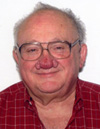
One of the highlights of my early career with the ACBL and as a bridge player, was a glorious opportunity for me to play with Edith Kemp (at that time) in the 4 session National Championship open pair event at the Spring Nationals in Cleveland, Ohio in 1965.
That event has been forever in my thoughts in spite of our not doing well in the pairs itself. Charge it off to my inexperience, or the difference in systems. Edith was a strict Roth-Stoner and my leanings were the other direction, but whatever were the true reasons, was no concern to me at that moment nor any time thereafter.
Edith was in the midst of a fantastic winning streak, having won both the Vanderbilt and the Spingold in 1963, a performance unlikely to be duplicated, especially by a woman, and one who stands just as tall today in any Lifetime Bridge Achievement associated with anyone else, even those who would be considered to have mastered our wonderful pastime.
Edith was very simply an elegant person, being an off-the-charts talented and bold player whose confidence shined forth, but never neglecting all the positive human characteristics that not all top players possessed. She was compassionate, humble, stunning in looks and dress, kind and considerate (to her partner and to the opponents), composed, titillating both in personality and in conversation, but what set her apart from others, was that those qualities stayed with her all of her life and were always abundantly on display each time I fortunately ran into her, exchanged pleasantries, and so was constantly reminded of who she was and had always been.
Rarely does a person in bridge stand for all the finest qualities the game represents such as top class play, active ethics, competitive ruthlessness, necessary complete concentration, and yet while doing, never led anyone to think that she was neglectful of all the best human qualities.
Having said the above, is there any wonder that bridge will miss her; her family and friends will mourn her; and all who came in contact with her will lose her cherished presence … especially me.
August 1st, 2010 ~ admin ~
26 Comments
Above is the title of Chapter 23, starting on page 259 of The Lone Wolff. Again this is a solid joint collaboration by The Wolves but narrated here by me (Judy) at the risk of placing it on my own blogsite and endangering the dropping of Pendergraph Pending to a more obscure location.
I labored over five years re-writing, editing and proofing for acceptance by Master Point Press before TLW hit the shelves. One of my pet chapters was about the youth of Zone 2 and last night, in one of the most thrilling finishes in ACBL history featuring Diamond v. Meltzer, America’s youth (though now probably considered middle aged) prevailed over the favorite. The star-studded losing team in the finals of the 2010 Spingold being played at the New Orleans NABC consisted of two ACBL Hall of Famers (Berkowitz and Sontag), two world class foreign title holders (Fantoni and Nunes), and a grown up top notch player, Kyle Larsen (whom I still remember as a promising youngster winning the Teenage Pairs with my good friend Bonnie Brier) partnered with a much improved spirited sponsor, the likeable Rose Meltzer.
Proudly rising to the occasion in a spellbinding ending which came down to the last two boards of a sixty-four board match were: John Diamond and Brian Platnick; Fred Gitelman and Brad Moss; and Eric Greco and Geoff Hampson. The margin of victory was exactly three IMPS. These six young lads played a very large part in the writing of Chapter 23. All (except Eric Greco who didn’t join the junior program until 1999) were part of the original group.
As Bobby begins his chapter on the youth …
”In the very late eighties I turned my attention to the plight of the Junior Players. The USA had been fielding a Junior team internationally for a few years, but up until then, and continuing – a pretty sad commentary with such a plethora of rising stars.”
He goes on …
“I conceived and created a Bridge Aptitude Test. It was presented in a format somewhere similar to the LSAT (the aptitude test used for law school admissions) and afforded me great insight into their talents, resourcefulness and problem-solving abilities. It amounted to picking their fertile young brains. From my simple idea of pretesting the candidates, the process took off. The exams were monitored and the venues were set up all around the country, wherever interest in serious bridge among the Juniors surfaced. My two best students were a some-time partnership, John Diamond and Brian Platnick, both from the D.C.-Virginia area. On a potential perfect score of 99, both John and Brian exceeded 100 on the strength of extra credit gained from on-point answers and suggestions that showed initiative (never prompted or considered by me).”
Just for the record, of last night’s six victorious members, Fred Gitelman and Geoff Hampson originally played under the Maple Leaf and the other four were representing the United States. I even recall the Trials being played at the Alexis Park, in Las Vegas fifteen years ago where I kibitzed a match in which Norman and Edgar were pitted against Eric and Geoff – and although the youngsters lost, Norman remarked to them what a bright future they had and that the bridge world would soon be standing at attention singing their praises. What great insight he had, as evidenced by the recent victory at the Reno Open Swiss Teams and last night’s Spingold squeaker!
Chapter 23 details much more about the training preparatory to the Junior Trials (and its eventual much improved results) as well as a practice weekend that Bobby arranged. Jimmy Cayne and his troops came down to Texas and stayed and played at an upscale Dallas hotel, affording these talented Juniors a healthy workout against his big guns. What a super way to learn in a prearranged setting and followed up by discussions based on a standard called The Aces Technique. A great learning method via the graciousness of the Cayne Team putting the youngsters to the test – topping off the weekend at Mr. Kuo’s famed Royal China, the designated site for many years where The Aces held frequent Victory Banquets.
There is so much raw material out there just waiting to be developed. It would be unbelievably beneficial if the American School Systems promoted our game, following the examples exhibited by many European and Asian nations – but alas, that has not yet come to pass.
Condolences to the disappointed Meltzer Team whom everyone thought had it sown up as the BBO viewers were about to shut down their computers and turn in for the night.
And – to the amazing Diamond Team – our heartiest congratulations! You made America proud once again!
JKW
July 16th, 2010 ~ admin ~
53 Comments
THIS IS ACTUALLY A COLLABORATION BETWEEN THE WOLVES BUT BECAUSE OF TECHNICAL REASONS WITHIN THE BRIDGEBLOGGING.COM SITE AND THEIR FREQUENCY RULES, THIS JOINT BLOG IS GOING TO APPEAR UNDER MY NAME ONLY AS WE DON’T WANT JUDY’S TIMELY “PENDERGAFFE” TO BE DROPPED FROM IT’S PROMINENT SPOT. Bobby Wolff
There appears to be a contentious argument brewing on the world bridge scene and while the two parties participating are on very friendly terms, they, at this point in time, appear to be clearly on different sides of the fence.
In order to solicit formal and sincere responses from all of you who are reading this, we will handle the possible contretemps in the following way:
1. We will offer no official or suggestive position on this possibly very important subject until next Monday afternoon, including no evidence, reasons or anything else which could be construed as leading the witness.
2. In the meantime, we would like to present the facts as we know them so that we can solicit your opinions, based on information – not our convictions. Whatever, this is definitely an up in the air subject, not previously thought about, but possibly a crucial and opportunistic one to consider involving the far-reaching fate of our game.
Here are the facts …
1. Jose Damiani, the sixteen year President of the WBF is retiring at the end of the Philadelphia World Series of Bridge tournament to be held this October, stepping down in favor of Gianarrigo Rona, President Elect of the WBF.
2. While leading the WBF toward Olympic (IOC) recognition we (bridge) are currently part of the International Mind Sports Association (IMSA). The 2008 Bridge World Championship in Beijing, China was held under the formal banner of IMSA and was conducted in a regal, respected, disciplined manner which echoed the increased world wide acceptance of our beautiful game and its fierce competition.
3. At a recent meeting of the Executive Committee of the European Bridge League (EBL), Jose informed the Council of the decision of the IMSA to accept the International Federation of Poker as a member of IMSA. He explained the basis of inclusion of Duplicate Poker as a mind sport and the potential financial benefits that might accrue to the other Mind Sport Organizations. At that time, the Executive Committee of the EBL expressed its resistance to these proposals.
4. A brief history background for you: Jose has worked long and tirelessly to establish bridge within the International community as a positive activity which can benefit young and old alike and contribute to the aims of the Olympic Charter. The recognition that was afforded by the IOC, in accepting the WBF as a sporting organization, has enabled many Bridge Federations to receive support from their National Olympic Committees and obtain acceptance within the wider community and, most importantly, within educational establishments, which is of utmost importance. Without bridge in the schools, we have little chance of survival.
5. According to the EBL, poker is an activity which is banned in many countries (possibly only Europe) and is not regarded in positive terms by most people. It is directly associated with gambling and the negative connotations that is inevitably linked with such activity. It is (again according to them) not linked with being a sport.
6. The EBL does not believe that allowing bridge to be linked with poker will be beneficial to our good standing in the community. Further, they believe that any links with poker will cause serious damage to our reputation and place in jeopardy all that Jose and the WBF have strived for and accomplished.
7. They further believe that there are significant risks to our recognition by the IOC if an umbrella organization such as IMSA pursues its own attempts to achieve recognition as a sporting organization. They also believe that it is not in the best interests of bridge for it to be subsumed into an umbrella organization which is then seeking recognition by the IOC. Instead they do believe that it is imperative that the link between the WBF and the IOC is a direct relationship between those two bodies.
It has become clear that the EBL is against the WBF promoting poker or duplicate poker as it now is being described as a partner in IMSA.
Those of you who have carefully read the above and feel qualified to offer a personal opinion, please do, but only after considering the following:
1. In a world organization such as the WBF, there will always be different opinions, based on heritage, culture and perceptions which will certainly influence decisions.
2. Poker, as is obvious to all of us on this side of the Atlantic, has made significant and successful inroads into the highly competitive TV world which has undoubtedly encouraged sponsors and much greater interest in that game’s promotion for all to see and feel.
3. The EBL’s opinion is undoubtedly heartfelt by them as to what is best for the future of worldwide bridge and our relationship with the IOC.
4. Obviously the eventual position of what the WBF decides to do or at least starts out to do may or may not have a significant effect on bridge’s continued world promotion and popularity as well, of course, as on our relationship with the IOC.
5. All of the above information is totally based on seeking opinions, points of view, and possibly other pluses and minuses we have not considered which could easily affect our eventual decision.
6. There will be a meeting in New Orleans at the upcoming Summer National bridge tournament at the end of next week, scheduled between Jose and the ACBL’s WBF representatives to discuss what has happened and what views to take. Time is very much of the essence and we would really like to hear your gut feelings about attempting to gain the recognition for bridge that poker has achieved!
7. If nothing else, this preliminary discussion may serve to educate many thousands of bridge players world wide on the internet the difficult and perhaps extremely important judgments which, in turn may serve to dictate the always cloudy long term direction of bridge itself.
Please let us hear from you by joining in and feeling free to contribute to our purposes which is both Bridge for Peace (Worldwide) as well as the Game for a Lifetime.
Judy and Bobby Wolff
March 10th, 2010 ~ admin ~
4 Comments
Jeff Rubens has taken the leading bridge magazine in the world and made it still better, but having said that, I do not approve of publishing what I consider simple sophistry in trying to win or even provoke a tired argument. In the March, 2010 Bridge World (under the Bits and Pieces section. p. 23), it is mentioned that sportsmanship dumping is alive and well in Texas high-school football.
It then describes a team, down by 4 points, and with little time left to play, but in possession of the ball, stalled out the last minute of the game rather than make an all out effort to win the game outright.
It then went on to say that the rules in that District made it so that if the subject team lost by 8 points or less in that particular game they would be a playoff qualifier beating out two competitors. Nothing could be further than this example being evidence of sportsmanship dumping since the rules made it such that this team had accomplished what it wanted to do which is to continue playing in the playoffs and did so by following the conditions of contest.
Sportsmanship dumping in bridge has only to do with allowing one’s status to not follow the spirit of competiton, either written or not written into the Conditions, but nevertheless playing to do whatever it takes to go on to the next level, keeping in mind that your team is responsible for representing the game as such and not using artificial negative tactics to further another team’s position rather than one’s own.
Yes, that spirit of the game means that even if the team feels that it would be better off if this team or that team could be eliminated by their team not playing up to their capabilities (and so felt justified in throwing that part of the competition), it would, in truth, be thought of rather, as a treasonous, despicable act and subject to severe discipline by the administration.
Sometimes, in the best interest of normal competition, a team may be confronted, usually by their up-to-then success, having to deal with ethical issues, not having any bearing on their direct success, but rather by what might happen down the road. In that event, every team is expected to adhere to fairness toward the rest of the field in general and not succumb to heinous, ugly unethical tactics.
October 4th, 2009 ~ admin ~
2 Comments
You may want to check the blog site of Judy Kay-Wolff captioned “DISGUSTING ‘OLD HAT” where I have responded very candidly to numerous comments about earlier long-buried cheating issues feared by others to be discussed. They have been presented in installments and I will be posting Installment 4 sometime today.
RSW
September 17th, 2009 ~ admin ~
1 Comment
Larry Cohen’s newest book “My Favorite 52” is definitely worth reading! Larry sets the style, like Jiminy Cricket in Pinocchio, where the reader virtually plays the role of kibitzer, but has the added dimension of having Larry’s voice in your ear acting as a cross between your conscience and your high-level bridge advisor.
Hand after hand (and every one is a treasure) takes the reader through the thought process of adjusting to the unfolding facts and making key decisions whether it be declarer’s play, partnership bidding or top level defense. Through it all, and I can assure you Larry is a very thorough bridge thinker, he doesn’t relax in his updating the reader on what direction to take to assure success, or, at least not to make a costly mistake.
The hands themselves lend themselves to what one would expect in tales of his favorite 52 hands of all time. Although 52 sounds like a lot, when one considers all the hands an inveterate bridge player would tackle over 25 or 30 years, the conclusion is that each one of them is very special and worth your undivided attention. The best part is that Larry has found a way for the reader to experience what other expert players already know, the emotion of mostly playing or defending, but sometimes even bidding, causing the man on the spot much angst, but well worth it, when the player realizes that he did his best.
This book represents what Larry has always stood for, the best that bridge has to offer.
August 15th, 2009 ~ admin ~
6 Comments
One of the most likeable human beings to ever grace the Texas Bridge scene was Dr. John Fisher, of Dallas. Everyone loved him. He was the town doctor and everyone came to him with their aches, pains and bridge hands. We just learned of his passing today after a brief illness. He was a terrific performer with the devil up his sleeve and was so much fun to be around (both at and around the bridge and examining tables as well). In Judy’s short eighteen month stay in Dallas, she played in the Wednesday Country Club duplicates with Marion Weed, Fran Beard and of course John Fisher. Now they have joined the other LONE STAR SUPERSTARS UP ABOVE — A PRETTY SCARY BUNCH TO MESS WITH!!
John, thanks for all you contributed to our local scene as a champion bridge aficionado and a remarkable human being. We shall miss you.
Bobby and Judy Wolff
July 31st, 2009 ~ admin ~
14 Comments
Regarding Appeal #4 which happened during the 2d qualifying session of the Von Zedtwitz Life Master Pairs during the Washington DC, Summer Nationals, I would like to take time to discuss the verdict and though, in my opinion, reached in order to following the current rules, is still a grave strike at the heart of our game. With the following facts:
| Dealer: East
Vul: E/W
|
North |
|
| ♠ |
A 9 8 6 3 |
| ♥ |
J 10 |
| ♦ |
Q 10 7 4 3 |
| ♣ |
J |
| West |
 |
East |
| ♠ |
K Q |
♠ |
5 |
| ♥ |
8 6 4 3 2 |
♥ |
Q 9 |
| ♦ |
A J 9 |
♦ |
K 8 6 5 |
| ♣ |
K 9 7 |
♣ |
A Q 10 8 6 3 |
|
South |
|
| ♠ |
J 10 7 4 2 |
| ♥ |
A K 7 5 |
| ♦ |
2 |
| ♣ |
5 4 2 |
| East |
South |
West |
North |
| 1♣ |
Pass |
1♥ |
1NT* |
| Pass |
3♠ ** |
Double |
All Pass |
Opening Lead: King of Spades
* Strong
** After a 1NT opening or a direct 1NT overcall, minor suit Stayman.
Our rules now state that normally the type of adventure which occurred on this hand would be labeled misinformation rather than just a misbid and so, consequently, caused the initial TD to cancel the result of 3 spades doubled making nine tricks (NS +530) and allow EW to score 3NT making nine tricks (+600). However the NS convention cards stated clearly that, after passing, a 1NT overcall was a takeout for the unbid suits.
It is past time for us, in the interest of fairness and equity, to make what happened, Convention Disruption (CD), an official offense, to be penalized accordingly, which hopefully, in the fullness of time, will force conventioneers to either learn their conventions or exercise their other option of not playing them and, if necessary, scratch them off the convention card.
Let’s examine the plight of their opponents:
When East was informed that his RHO’s 1NT overcall was strong he naturally passed since to consider rebidding a minimum opening, while vulnerable, when clubs figured to be well stopped had to be, at the very least, a very dangerous and hence not a compelling option. On the other hand if East would instead have been privy to 1NT being a TO for the other two suits he should be interested in telling his partner why he opened the bidding in the first place, in this case not to show a balanced opening, but to offer his good club suit as a possible contract. After all the design for bidding in our game is merely a language to convey what we have and, by that inference, what we don’t have. WHEN CD OCCURS, WHETHER INTENTIONALLY OR JUST ACCIDENTLY, AWAY GOES ALL SENSE OF WHAT OUR GAME IS ABOUT ON THAT HAND! It should then occur to our lawmakers that when particular conventions are designed to be defensive, meaning trying to find a successful sacrifice or sometimes just designed to drive the opponents higher, that forgetting the meaning(s) all too often unilaterally penalize the opponents while at the same time and all too often, not create the risk that other forgets, usually constructive bidding ones, would.
With that in mind it becomes necessary to establish discipline to those who legally want to disrupt their opponents or at least want for themselves to be considered tough opponents to play against. All well intended and perfectly legal, but NOT SO when conventions are forgotten. It then naturally follows that all CD’s should be recognized as very unhealthy for the game and if possible, penalized out of existence.
As a final thought, on this hand I would give NS a zero on this board. After all, the unbelievably talented Michael Jackson is dead at an all too young age, possibly because of an error made by his prescribing doctor, but nevertheless as dead as he would have been if he had instead, been brutally murdered. Second I would only give EW an average on that board since they are not entitled to a windfall result simply because their opponents were unlawful. It is very important in a pairs tournament to Protect the Field (PTF) so that matchpoints are not distributed like candy from a candy store to those who have not earned them. As corroborating evidence NS should have made an overtrick in 3 Spades doubled, one which would not risk the contract, therefore showing evidence of poor play which, IMO would give them a zero instead of a result up to 1/4 of a board. On the other hand West did choose the wrong call when he doubled them in 3 spades even though I can suggest nothing more logical, therefore restricting their result to an average rather than an average plus. Mental toughness is a necessary prerequisite to be an able appeals committee member.
Summing up, I think the committee presiding on this case was made up of fine bridge players and also well balanced people who were only trying to follow the law. However, I think the time has come to conduct an environment of a Bridge Meritocracy rather than an outdated law forum and as bridge is constantly changing, I think our bridge administrators should also follow suit and update themselves.
The harsh penalties suggested apply not only to the crafty foxes always seeking a free chicken sandwich, but also to the totally honest animals whose only crime is forgetting a used convention.
July 4th, 2009 ~ admin ~
6 Comments
Among the PRIME QUALIFICATIONS OF LEADERSHIP should be: effectiveness, supremacy, skill, initiative, foresight, energy, influence, authority and power. All of those qualities help describe, but do not necessarily adequately distinguish, the difference between a leader and a politician.
Ah, there’s the rub! To add another difficult hurdle to becoming a leader, one quite often would be required to endure the political process in order to be enabled. Exceptions, of course, would encompass individuals, while during fierce battle, lead (or attempt to lead) their group out of harrowing, sticky situations by showing the way as to what needs to be done to achieve victory or, in a less threatening environment such as a court room, finding a way to convince the judge and/or jury the way for them to think in order for them to reach a just decision.
The type of leadership that I want to discuss concerns itself with basics, likening the concept to parents setting examples for their children to do the right thing. Also similar is the concept of the clergy reciting various disciplines which in all cases serve mankind and try to guide us all to behave properly — setting a high standard which we should all like to follow!
When discussing the leadership necessary to run an organization, that organization is the focal point, and there is NO OTHER CONSIDERATION!
Leadership 101 (if there were such a course in college) would demand that the one in charge employs the following guidelines:
(1) Never think what would be the best for an individual, or a group of individuals, or a subset of any other considerations;
(2) Always consider what will best serve that organization in the long run, continually being extremely careful to only set positive examples! Quite often this involves the deprivation of others along the lines of convenience and material advantages, but the one in charge should never lose sight of the only goal —
BEING FAIR TO THE ORGANIZATION, ITS PURPOSES AND OBJECTIVES AND THE REALIZATION THAT IF EVER IT WAS THOUGHT BY ANYONE THAT THOSE GOALS WERE BEING COMPROMISED — WHATEVER WOULD RESULT WOULD BE A SERIOUS CHALLENGE TO THE MAIN OBJECTIVE OF THE GROUP.
It now is probably time to discuss some specifics! An organization which features competition must avow that after the Conditions of Contest HAVE BEEN WRITTEN AND APPROVED, THEY MUST BE FOLLOWED EXACTLY AS WRITTEN. The caveats involved revolve around competency by the individual or group doing the writing. IT IS IMPERATIVE THAT ADEQUATE proofreading BE GIVEN TO THE DOCUMENT BEFORE APPROVAL, AND ONCE APPROVED, CAN NEVER BE CHANGED OR EVEN MODIFIED — OR ELSE IT WILL BE SEEN (BY AT LEAST SOME) AS A POLITICAL MOVE IN ORDER TO SERVE A LESSER GOD AND BE IN CONTRAVENTION TO THE GOALS OF THE ORGANIZATION.
FOR ANYONE SERIOUSLY ASPIRING TO BE A LEADER THIS MUST BE HIS OR HER CREED, RELIGION AND REASON FOR BEING; OTHERWISE, WE WILL HAVE NO LEADERSHIP AT ALL — A CONDITION WHICH IS NOW EXISTENT AMONG THE ONES WHO CONTROL US — our international bridge organization, THE UNITED STATES BRIDGE FEDERATION (USBF).
June 17th, 2009 ~ admin ~
22 Comments
Quite often a relatively unimportant event may trigger a positive turn which, to some, may affect their specialized world. On this possible full sea on which we are afloat, we must take the current when it serves, or instead — continue to veer far off course.
In this case, the specialized world is the game of worldwide tournament bridge and the full sea is the just completed Team Trials to determine who represents the USA in the upcoming Bermuda Bowl, to be held in Sao Paulo, Brazil the end of August, through the middle of September, 2009. The USA, because of its mighty tradition in bridge and its uncanny depth of very top players is the only country in the World Bridge Federation (WBF) to be granted two teams. In the recently completed Open Team Trials, held in White Plains, NY, the Steve Robinson Team came from almost nowhere to dominate the event and finish First, an unlikely upset which has not happened often during the Trials History.
The second team which qualified, however is the prime subject of this discussion and it is the tried and true Nick Nickell team (composed of two professional pairs) by every standard, four of the very best players in the entire world. Further, one duo is probably considered the best partnership in the universe and the second newly formed pair heading toward eventually challenging for that hallowed reputation. The third pair, Nick Nickell and Dick Freeman are a very good pair and have been the namesake for this dominant team for around 18 years.
Nick, the President of Kelso & Co., an ultra successful leverage buyout firm located in New York City, also serves as the sponsor of the team seeing to it that his teammates are happy — providing the financial support necessary to enable his group to think only about how to play bridge in the most effective world class manner. It needs to be added that Nick is one of the most respected members of the bridge community, being highly ethical and conducts himself in as close to a perfect manner as possible. Not long ago he was asked by the current WBF President, Jose Damiani of Paris, France, to succeed him as President of the WBF, but Nick declined because accepting would take far too much time out of his already crammed schedule not to mention his devotion to his family. It would not be a stretch for me to suggest that Nick is revered in the Bridge World as Warren Buffett and Bill Gates (coincidentally both enthusiastic bridge players) are in the Financial World.
Having said the above, it is time to get into the nitty-gritty issues at hand.
The Nickell team, having been granted a bye into the semifinal round of the Trials by virtue of their year long, excellent qualifying performance, lost their first match sending them into the repechage (an opportunity for a losing team to get back into the event) which is used to determine the Second USA team. They then won their next two matches which led to them playing in the Finals of the repechage and creating a rematch between them and the Fleisher team, the team that beat them in their opening match.
Dick Freeman, Nick’s partner, who was suffering from pancreatitis was too sick to continue playing and departed for home. This left the Nickell team with only five players and Nick without his favorite partner. Their team then decided to play only four in the final. Nick had in the past played often with Bob Hamman, one of the front four players, but their team decided that their best chance was to continue to play the original two partnerships in the Finals.
That did not bode well for the upstart Fleisher team and although the match was virtually tied at the end of 60 boards (out of the total of 90 to be played) the Nickell team broke it open and wound up winning handily.
Now to the problems caused by the sudden change of team composition.
Bridge is not like other professional games where in team sports, teams have many more players on their team than are required to be on the field during the actual playing. In the NBA, each team has twelve, although only five at a time are on the court; in Major League Baseball each team has 25 active players — although only nine are on the field at a time; and in Football each team has 50+ although only eleven are legally allowed on the gridiron at any one time.
All substitutions are at the behest of the Coach or Manager. In bridge, most teams have three partnerships (even though only two are playing at any one time), because of the lack of spectator interest (which in turn denies TV coverage, the source of most of the rather large amounts of money associated with the major sports). It has caused sponsorship in bridge to be created consisting of two expert pairs and usually the third pair is composed of an experienced top player who plays with the sponsor. In effect, the sponsor buys his or her way onto a particular team, in order to play the required number of boards to be eligible to be declared part of the group in the event of emerging triumphantly.
Now to the rub ……………….
Sponsorship serves as an enabling mechanism to bridge pairs who soon find out that in order to compete effectively, they must devote more time than expected to develop and hopefully keep their partnership world-class. For club games, followed up-the-line by sectional, regional and then national games, no one should care much about who plays with whom or, for that matter, who eventually wins. Although all of the above events are hotly contested and very competitive, the country’s bridge reputation and nationalistic feelings matter not. Sure, there are many foreign (usually top-class sponsored) players who come to our three annual Nationals to compete, but in those events no one looks on the competitive side as crucial similar to foreign players in the major TV sports who join US teams as full fledged players. However, when the WBF puts on their annual world tournament similar to the Davis Cup (Tennis), Ryder Cup (Golf), America’s Cup (Yachting) or the various Olympiads — competitive blood runs hot and we, like other countries around the world, all strongly pull for our home country.
In world bridge, very simply, we do not send our very best three partnerships. Usually, with a few exceptions, every team represented, whether it is the Open Division, Women’s Division or even the Senior Division, showcase many players of less than world-class stature who have earned the right to represent their country (almost always accompanied by two World Class partnerships).
While Nick is partnered by Dick and together are way above average for a sponsor and his partner, there are many sponsors who are way down the list in ability and frankly should not be remotely considered to be trusted to play well enough to have a decent chance to win, nor, of course, even to have deserved the honor to represent our great country. It is imperative for our administrative heads to have at heart the best interest of fielding a USA winning team. In those other sports mentioned, at least to me, and currently illustrated by the Ryder Cup, it is extremely competitive with our best golfers bonding and going out as a team in search of making the USA proud and defeating their worthy European opponents.
After all — what are world sports all about (symbolic in our Olympiad competition, and for more years than many of us have been alive), except rooting for one’s home country and hoping for glorious victories from our world class individuals and teams. For that matter, when we are glued to our seats watching the Olympics on TV, isn’t it inspiring to watch gold medal winners whether or not it is one’s home country or not? Is that not one of the thrills of living in this day and age of seeing who is supreme at what he or she does?
World competition should be about superlatives!!!!
With all of the above in mind — you may ask, what is the problem and, if so, what is the solution?
First of all, our administrators (in charge of the team selection process and the validation of our players) CANNOT have a conflict of interest. Being a sponsor, per se, is a conflict since being a sponsor may well entail writing and enforcing the rules for lesser than world class players still being in the running for international team selection.
Professional players should also not be in on the selection and validation part of the process since their mere relationship with their own sponsors (plus possible ones on the horizon) is too much to overcome. Obviously, there are quite a few on the periphery of both taboos and must be ruled off-limits. Our current USBF BOD is unfortunately made up of almost exclusively these classes of people with only one or two exceptions. What happens reminds everyone who knows, just how awful the current political process has become. Being part of the tabooed majority is a real power move by the individual doing it. He or she not only rule for himself or herself, but becomes a good person for almost everyone in the process to know and with whom to cultivate a friendship.
What, then, is a possible solution? How about setting up a Commissioners Office where all topical conversations and actions are always clearly transparent! Open votes and no secrets! The primary objective for international selection and play is to create as good a team for the USA as can be selected while at the same time doing everything possible to fund the event and provide the necessary props (coach, logistics, training procedures and TLC) to give our teams the tools to be as good as they can be, keeping in mind that the players are not starting from ground zero … far from it.
Some of our better players would no doubt drop out claiming poverty. If so, what have we really lost? The good news is that everyone worth their salt will want to play for the USA which has always been, at least for me (and I’d be surprised if not for everyone), the thrill of a lifetime. Also the right amount of pressure will be brought to bear, by making each individual responsible for his/her own actions which, no doubt, will be his/her resume for future championships.
Younger players will get better much more quickly since our attention should always concentrate on our youth. They require experience to be the great players of our coming generation — seeking out a compatible partner of their choice. It is time that the zoo becomes run by a well intentioned wise, animal-loving zookeeper rather than turning it over to the resident mammals.
The decision made here will have a powerful affect on the game in the future. I caution those who may be optimistic to not expect miracles. Most leopards do not change their spots and politicians, at least to me, are even more predictable than leopards. What we should all hope for is eventual change, but in order to have a chance for that to happen most of the readers must be unabashed to join in with their comments, suggestions and involvement in a timely fashion before any irreversible decisions are made. We should all want what is best for bridge!
Before closing, I would appreciate your attention to the pertinence of the following……..
1. Selecting the best team possible to join with the winning Robinson team to complete the roster of our two teams. Keep in mind that the team which defeated Fleisher in the USA2 final was significantly different from their proposed team for Brazil.
2. Keep in mind that the Nickell team did not try and mitigate the playing circumstances after Freeman’s departure, by having Nickell play with Hamman (a former partnership) at least some, trying to validate Nick’s presence on the current team.
3. Consider the very unlucky plight the Fleisher team had to overcome, through no fault of their own, playing straight through against two of the best partnerships and four of the best players in the world. Caveat #2 above may have served to reduce the advantage the Nickell team had accrued, to which many may think that they did not deserve.
4. The strong character, table ethics, and behavior of both Nick and Dick should be given every possible positive consideration. Just knowing who they are — would immediately preclude any of what happened being thought of as bogus. Not so with many others.
5. Above all — whatever happens will automatically create an important PRECEDENT which will not go away.
6. Regardless of any other relevant factors, those who are totally indoctrinated with the theory ONCE A TEAM — ALWAYS A TEAM should urge them to reinstate Nick and Dick.
7. Seek candid responses from the professionals how they would feel playing without their sponsor (should that be the Committee’s ruling) and how this decision will affect U. S. bridge over the next large number of years.
8. Administrative decisions often have much more meaning than the playing results of any competition. The goal here is to make not only the players have confidence in what is being done for them and with them, but face the reality that all the caring bridge players in the ACBL who help fund the teams, have at least some stake in what will be done.
9. Let objectivity rule and we’ll all be happy with the result. Deny it and we will forever be in a political hand tying morass.
Real life politics takes many shapes and forms such like in bridge when a person in the important decision making process seeks to be a future Captain or Coach of a certain team or teams. If one thinks that doesn’t influence his decision on where he distributes the largess, there is a well-known bridge I would like to sell you.


 Subscribe to our feed
 Bridge-related